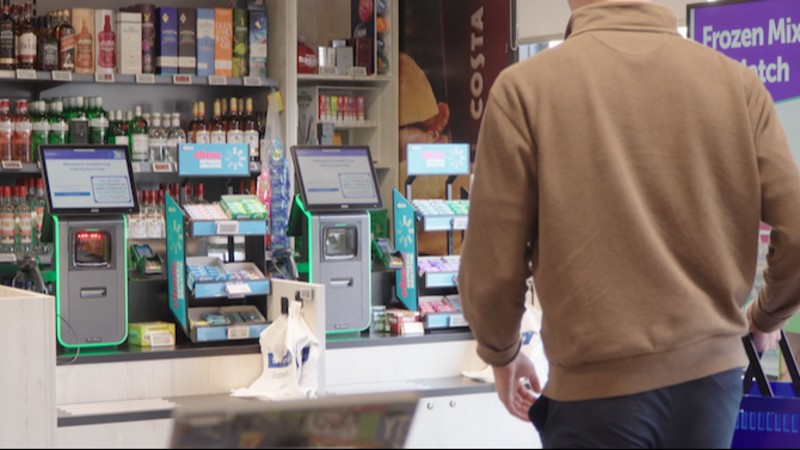
Scotmid Co-op Expands Assisted Checkout Across Store Network
Scotmid Co-op is rolling out assisted and hybrid checkout technology across its store estate as part of efforts to reduce theft and improve the in-store checkout experience.
The solution, developed in partnership with 4POS, has now been deployed in approximately 90% of Scotmid's food stores (around 160 locations) and across its Semichem health and beauty chain.
Hybrid Checkout Designed to Balance Speed and Supervision
The assisted checkout model combines elements of traditional staffed tills and self-checkout systems.
Key features include:
· Dual screens enabling staff to assist customers in real time
· Faster intervention during transactions to reduce wait times
· Improved queue management and checkout flow
The approach is designed to maintain customer convenience while allowing store staff to step in when needed.
Loss Prevention Built Into the Checkout Process
A central objective of the rollout is to reduce "walk-offs" and other forms of shrinkage.
The system includes:
· On-screen customer video capture during transactions
· Visual indicators (such as coloured lighting) to signal active payments
· Enhanced staff visibility over checkout activity
These features aim to integrate loss prevention directly into the checkout workflow rather than relying solely on post-transaction monitoring.
Modular POS Architecture Supports Store Flexibility
Scotmid highlighted the flexibility of the underlying POS system as a key factor in its decision.
The same core hardware can be configured for:
· Traditional staffed tills
· Self-checkout lanes
· Assisted or hybrid checkout setups
This modular approach allows stores to adapt layouts and checkout configurations based on:
· Store size
· Customer traffic patterns
· Adoption of self-service
Adoption Targets and Early Performance
The retailer set an initial target for assisted checkouts to account for 30% of transactions.
According to the company, this target has already been achieved, with further growth expected as customer adoption increases.
The system also allows for future conversion of traditional tills into assisted checkout points, providing additional operational flexibility.
Checkout Systems Evolve Beyond Transactions
The rollout reflects a broader shift in how checkout infrastructure is being positioned within retail operations.
Beyond processing payments, checkout systems are increasingly used to:
· Support loss prevention strategies
· Enable retail media and on-screen advertising
· Improve staff productivity and customer flow
In this context, POS architecture is becoming a central component of store-level decision-making.
Store Technology Becomes a Strategic Lever
The deployment highlights how convenience retailers are investing in checkout technology to address multiple operational challenges simultaneously.
These include:
· Rising shrinkage and theft
· Labour efficiency
· Customer experience expectations
As store formats continue to evolve, flexible and modular checkout systems are likely to play a growing role in enabling retailers to adapt quickly to changing conditions.
Based on reporting from Retail Technology Innovation Hub